The Market
The Rickenbacker Paradox: Why a 1960s 330 Costs Only 2.5 Times a Modern One
October 7, 2026 · 4 min read
The Sustain · Issue #10 · The Market
In the vintage market, age usually means a steep premium. To measure it, we took the models in the GuitarRef database that have prices in both the 1960s and the 2020s, and divided the average estimate for an excellent-condition guitar from the 1960s by the 2020s figure. The result is a multiple: how many times more does the old one cost?
For the big names, the multiple is large. A Telecaster from the 1960s averages €20,400 (~$22,200) against about €1,400 (~$1,500) today, a multiple of 14.9. A Gibson SG Standard comes to 9.8, and an ES-335 to 7.7, from €22,700 (~$24,700) down to about €2,900 (~$3,150).
Rickenbacker tells a different story.
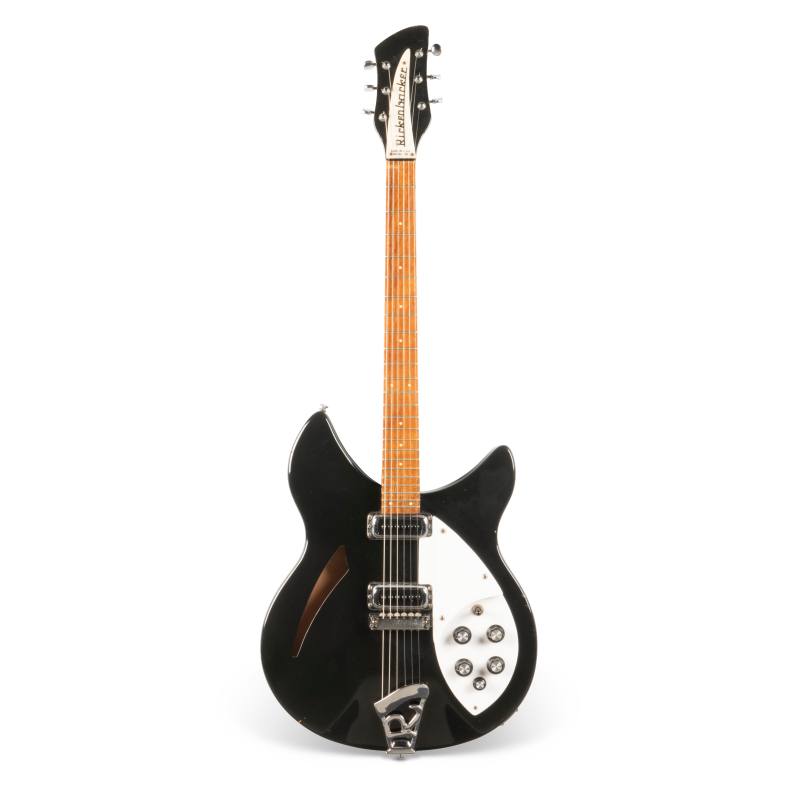
The 330 goes from about €5,700 (~$6,200) in the 1960s to €2,200 (~$2,400) today, a multiple of 2.5. The 360/12 lands at 2.6 (about €8,200 against €3,100) and the 330/12 at 1.7. These are averages of yearly estimates, and the 1960s figures rest on a handful of listings each (three for the 330, five for the 360/12), so read them as orders of magnitude.
Among the electric models we track with enough data in both decades, these sit in the lower part of the board, alongside Gretsch (the Country Gentleman at 2.3, the 6120 Nashville at 2.5) and the Fender Duo-Sonic (2.6).
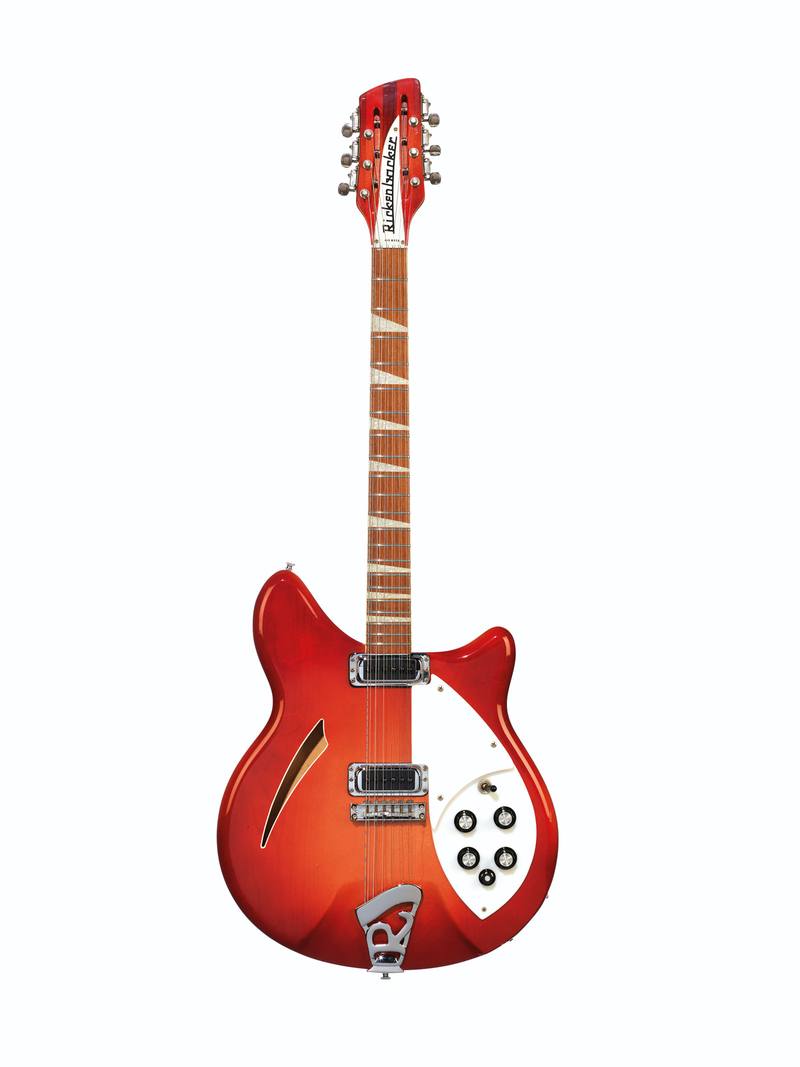
Why is the gap so narrow? We can only offer a hypothesis, not a proof. Rickenbacker has kept its core models in production: the 360 has been made since 1958, and a new one still lists at around £3,100 (~€3,800, ~$4,100) at a UK retailer. A recent used 360 sells for about €2,500 (~$2,700) in our data, not far below the price of a new one. With so little room between new and used, the gap with the 1960s stays narrow.
The artists in our database show how the same instruments stayed in the picture for decades. George Harrison received his 360/12 in February 1964 and used it across most of the album A Hard Day's Night. Pete Townshend bought his first Rickenbacker in early 1964, but the guitars were too fragile for his stage act, and by 1966 he had moved to Stratocasters, Telecasters and later the SG, before returning to Rickenbacker 12-strings in the 1980s and 1990s. Tom Petty bought a 1967 Mapleglo 360/12 from Norman's Rare Guitars in 1980, and it appears in the videos for "The Waiting" and "A Woman in Love (It's Not Me)". Johnny Marr bought his 1982 Jetglo 330 in 1983 and built the sound of "What Difference Does It Make?" around it.
That last guitar is the real lesson. In September 2026, Marr's 330 fetched £358,400 (~€440,000, ~$478,000) at Christie's, the top lot of his collection sale. That is more than 75 times our average estimate for a 1960s 330. Whatever the market says about a model, a name on the case can overwhelm it.